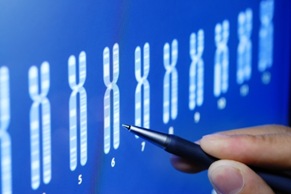
 An article in the United Arab Emirate newspaper The National (wikipedia) does a terrific job of highlighting recent research from Family Tree DNA. The story – “DNA could illuminate Islam’s lineage†– discusses research that has attempted to elucidate the Y-DNA signature of Mohammed. Although Mohammed did not have a son, he had a daughter who married her paternal second cousin, thus passing to Mohammed’s grandchildren the same Y-DNA. From the article:
“For almost 1,600 years, the title Sharif, Sayyed, or Habib has been bestowed on Muslims who have been able to trace their roots back to the Prophet Mohammed through intricate family trees, oral histories and genealogical records. But now an American DNA lab says it may have identified the DNA signature of descendants of the Prophet Mohammed, and perhaps the prospect of a direct, more accurate means of confirming or identifying such a connection.â€
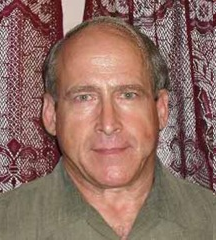 In January I wrote about Benjaman Kyle, an amnesiac who was found on August 31, 2004 next to a dumpster behind a Burger King in Richmond Hill, Georgia. In that post, “
 In February, I received a
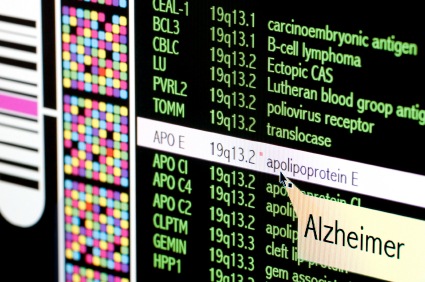
  I’ve been working on a presentation regarding the future of genetic genealogy, and one aspect of that future is the ability to trace DNA (SNPs, mutations, haplogroups, etc…) through recent history as the result of combining extensive genomic sequencing with massive family tree information. Although the ability to do this will have many uses (both for genealogy and for personalized medicine), it will also raise a number of privacy issues, as a recent paper suggests.


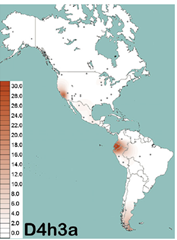 An international team of researchers have concluded that humans entered the Americas from Asia along at least two different paths. By studying two rare mtDNA haplogroups found in Native Americans – D4h3 and X2a – the researchers conclude that D4h3 spread into the Americans along the Pacific coast while X2a entered through the ice-free corridor between the
  I recently wrote about using genetic genealogy to potentially identify a male’s unknown surname. Although I had in mind using DNA to find an adopted male’s biological surname, the method has numerous other applications. For instance, it can be used in an attempt to identify the surname of a male who has forgotten his biological surname.